Holden Grissett, 2015
September 28th, 2026


AI and Aerospace
Holden is researching audio AI models at Liquid AI after interning at SpaceX—while embracing a new role as a parent and carrying lessons from Riverfield into the future.
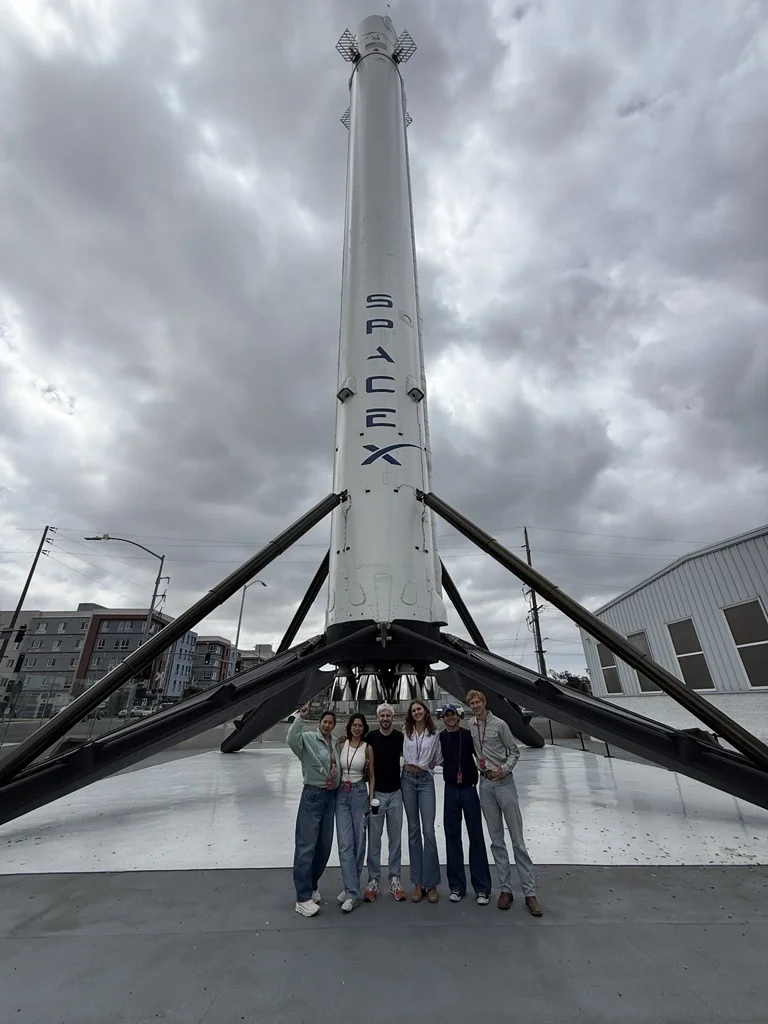
Tell us about yourself and what you're doing now. I recently finished an internship at SpaceX as an AI Engineer while doing my MS at UCLA. I'm now moving to San Francisco to take a new role as a Member of Technical Staff at Liquid AI. I also recently had my first baby!
What is one lesson, experience, or mentor from Riverfield that has stayed with you? My most formative experience at Riverfield was senior year, when I was taking English class with Mr. Donaldson. I was struggling in English class, so I asked my teacher if I could write about a topic that was only tangentially related to English for my final paper. It was a hard sell, but I was really hoping he would accept it because I was becoming interested in economics, and couldn't get myself excited about some of the standard content. To my surprise, he accepted. I wrote about John Maynard Keynes and the economic theory he developed in the wake of the Great Depression, and it was by far my greatest writing work I made at Riverfield. In retrospect, it's clear that he saw what I needed better than I did: a source of inspiration for my work. He adapted to my interests, and my writing came naturally. This taught me two lessons. The first is on how good teachers operate. They listen as well as they speak, and they aren't afraid to be flexible to get students excited about their work. The second is that I must also prioritize the work that excites me — I can't wait for other people to put me in a position to win. Mr. Donaldson taught me a set of lessons that I carry with me to this day, and I hope to embody those even more as I enter parenthood.
How did your time at Riverfield help prepare you for where you are today? I think one of Riverfield's strong suits is self-expression. Riverfield has a diverse set of extracurriculars that support expression in various forms. That diversity allowed me to explore my interests without feeling locked into one specific activity. Theatre class was particularly helpful in getting me to develop my voice. It taught me how to express myself at a time when I wasn't completely comfortable putting myself on the spot. Today, I feel like I am one of the more expressive individuals on the engineering teams I've been on, which allows me to build a rapport with teammates easily and support collaboration between teams at work.
What does a typical day look like as a software engineering intern? It's a particularly weird time to be a software engineer, because LLMs are doing so much of our work now. They have only just begun to touch white collar work. Just 6 months ago, I barely used LLMs to get my work done. Now, I work incredibly fast - instead of writing code, I mostly verify it against the goals and requirements I have. Code has become a cheap commodity. With that development, software engineers now work more like very technical product managers or systems engineers (depending on what kind of software role you're in). I go to people in the company, ask them about their problems, and then translate our discussion into ideas that I mull over with the team and build with an LLM in a few hours. This loop used to take weeks to months, but now you can accomplish a single iteration of this loop within a few days. This means that we often get projects done much faster, which is great. The biggest bottleneck to productivity now is figuring out good requirements for your work and verifying they've been met.
What inspired you to pursue a career in software engineering and the aerospace industry? The aerospace industry was always on my mind since I was little. Software entered my mind for the first time when I was playing video games, which I think a lot of kids can relate to. I would mod Skyrim and realized I could make my own mods to do fun or silly things in the game. My modding career wasn't particularly long, but after some encouragement from a friend, I tried out actually coding and really enjoyed it. The tight feedback loop between work and output was more satisfying than it was in other engineering domains, so I chose to pursue it more seriously. However, I still loved the idea of being in a hardware-focused industry. Despite software's lucrativity, I still think that the biggest breakthroughs we can make as a species require massive hardware engineering effort, so I'd like to allocate my effort in hardware-oriented domains of software.
What's been the most exciting or rewarding part of your current internship so far? Every day something exciting is happening here. The breadth of projects and speed at which we do them means there is always incredible work being done in the next cubicle over. The coolest thing I've done at SpaceX is improving Grok at engineering, which I can't get into detail on, but promises to improve the speed at which we can develop hardware for the moon and Mars.
What has been your proudest accomplishment so far? I see myself as a bit of a comeback story. I had a lot of low points before reaching where I am today. I'm proud that I proved to myself that I can achieve everything I dreamed of doing when I first entered high-school. I'm also immensely proud of my baby.
What advice would you give students who are interested in software engineering, technology, or pursuing internships with innovative companies? I'd encourage you to take initiative in building your own projects — the most fun ideas are the ones that make you feel excited, and those are also the ones that engineers like. If you want to 3D scan your cat and print it out, do it! Maybe you could make a model airplane with a miniature engine? LLMs have greatly lowered the barrier to doing fun and interesting stuff on your own - you don't have to be an expert in aerospace or electrical engineering to start building something functional now, you just have to be willing to try new things and iterate on your ideas.
What advice would you give current Riverfield students as they think about their future? Your habits are what make you, you. If you see a future for yourself that you want to make happen but you don't see the path, start with your habits. Every choice you make, even the most menial choice, is one small step toward future you. What you condition yourself to enjoy doing every day will be what you instinctively do 10 years from now. If you find your habits are misaligned with your vision, start with small, and build yourself up. Eventually, you'll be the person you want to be automatically, without even trying.
Lightning Round
Coffee or tea? Coffee
Morning person or night owl? Night Owl
Favorite programming language? Haskell
Mac, Windows, or Linux? Linux! (Though I use all 3, they all have their place)
Dream project to work on in the future? Mass Driver on the Moon
Three words that describe your internship? Exciting, fast, challenging
If you could witness any space mission in person, which would it be? Really hard to choose since they're all so cool, but Apollo 11 must have been a surreal moment for everyone watching.
Favorite Riverfield tradition or event? Riverfield Rocks
Best advice you've ever received? Commitment is freedom